Case Study
Critical Gearbox Helps an Observatory Keep Their Eyes Trained on the Night Skies
On a clear night, high on a remote mountaintop, an observatory’s dome rotates smoothly and almost invisibly while scientists point a large research telescope at a dim smudge of light hundreds of millions of light-years away. That faint light can carry answers about how galaxies form, how stars are born and die. For astronomers, every clear night is precious time for data collection; even a few hours of unexpected downtime can mean missed observations, incomplete experiments, and months of lost opportunity.
So, when the observatory’s dome started suffering repeated drive failures, the consequences were beyond mechanical inconvenience. The dome’s rotation assembly relies on a set of electric motors and right-angle gearboxes that drive a rubber-coated wheel and chain transmission. This configuration must overcome enormous inertia to swing the dome precisely and quietly. The system operates without soft-starts or servo control, and it endures heavy cyclical loads every time the dome turns to a new field of view. Those demanding conditions exposed the weakest link in the setup: gearboxes that began to fail more often than expected, interrupting nights of critical observation.
Temporary fixes — gearboxes repurposed from other facilities and local shop repairs — bought time but not confidence. Failures reoccurred, and the observatory faced a stark choice: accept ongoing risk to its scientific program, attempt a risky redesign in the middle of an observing season, or find a fast, dependable fix that matched the existing system’s mechanical interfaces and field conditions. Speed mattered, but reliability mattered more: the solution had to fit the motors and couplings already in place, survive harsh, remote transport and installation, and restore nights of uninterrupted observing while the facility planned a longer-term modernization.
The solution: keep what worked, improve what failed
As the original OEM with rights to Western Gear® designs, Philadelphia Gear offered a pragmatic path forward: replace the failure-prone components with new, factory-built right-angle drives that preserved the proven geometry and interfaces of the originals but were manufactured and tested to modern quality standards. This approach minimized integration risk, restored operational confidence quickly, and created breathing room for the observatory’s engineers to evaluate a thoughtful system upgrade later — perhaps adding soft-starts, servo controls, or purpose-built reducers tailored to the dome’s unique inertia profile.
“The original gearboxes were installed in the 1960s and ran for more than 50 years — a real testament to the original design,” said Christopher Van Sant, senior design engineer. “Being able to go back to the OEM and get new, modernized drives that fit the existing interfaces and come with a five-year warranty made Philadelphia Gear the clear choice. You just can’t get that level of legacy knowledge and support elsewhere.”
Key elements of the solution:
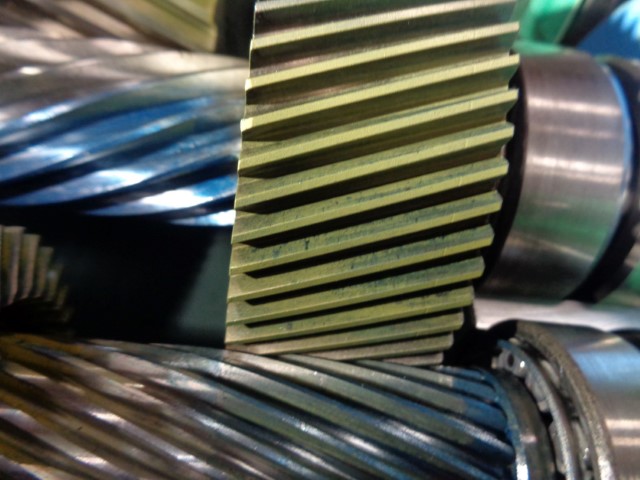
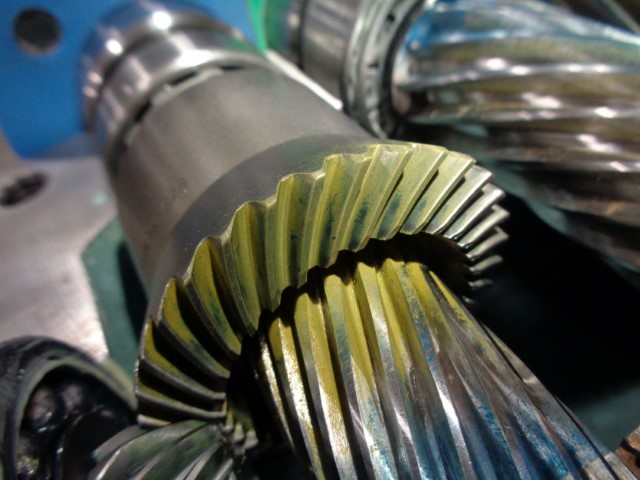
- A proven heavy-duty right-angle drive manufactured to match original specifications for gear lead, profile, runout, and spacing.
- Fabricated and stress-relieved housings, precision critical-interface machining, and internally ported splash lubrication to cope with heavy loads.
- Factory validation including no-load, full-speed mechanical spin tests and final inspections to record temperature, vibration, sound, and oil conditions.
- An industry leading five-year manufacturer’s warranty to back performance.
This approach addressed two simultaneous priorities: rapidly replace the most failure-prone components with robust, compatible assemblies, and create time for the facility to plan a future modernization without risking immediate operations.
Implementation: concise, controlled, and quality-driven
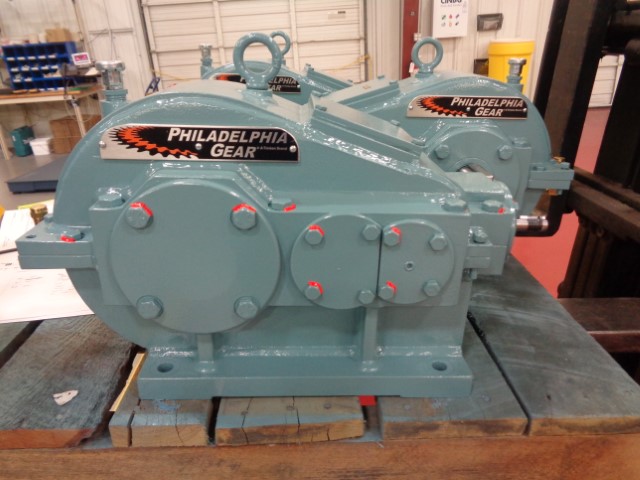
From inquiry to order, production emphasized quality controls that matter in the field: matched gear and bearing ratings, stress-relieved housings, and a splash lubrication system tuned to the assembly’s operating profile. Each unit underwent a recommended spin test (full speed, extended duration) with operational parameters recorded and a final visual inspection. Drives were painted with durable epoxy coating, preserved with rust inhibitors for six months, and packaged in accordance with international export and phytosanitary requirements to survive transit to the mountaintop site.
Because the solution preserved original interfaces and operational characteristics, installation required minimal mechanical adaptation. The facility’s maintenance crews could replace the worn assemblies with the new units and return the dome to service quickly while the engineering team continued evaluating longer-term system upgrades.
Outcomes: immediate relief and longer-term confidence
The delivered drives provided the facility with immediate operational relief. By replacing repeatedly failing gearboxes with new, factory-tested assemblies built to original specifications, the team minimized integration risk and dramatically lowered the probability of near-term failures.
Tangible outcomes included:
- Replacement of multiple failed drives with new, warranty-backed assemblies engineered to original Western Gear specifications.
- Reduced short-term risk of downtime due to gearbox failure, preserving observing schedules and protecting scientific productivity.
- A documented factory test record and five-year warranty that shifted maintenance risk away from local repairs and toward the manufacturer during the early operating years.
Beyond these immediate benefits, the engagement created breathing room for the facility to plan a modernization program: a thoughtful, system-level redesign that could include soft-starts or servo controls, torsional vibration mitigation, or purpose-engineered reducers built specifically for the dome’s inertia profile.