Epicyclic (planetary) gearboxes
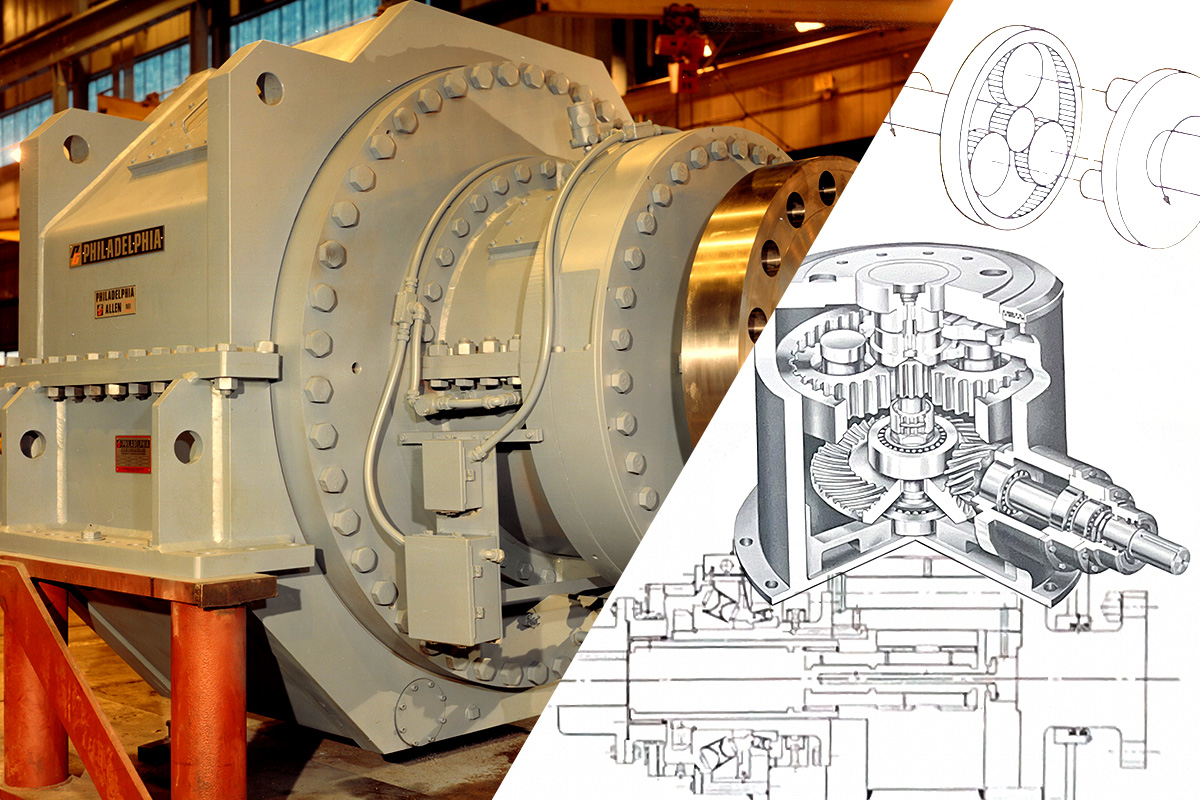
Epicyclic gear drives split drivetrain power along multiple internal paths — specifically rotating some gear elements along and within the circumference of other gear elements for one of the most compact, efficient methods of power transmission among industrial gear drives.
Every epicyclic gearbox unit consists of an internally-toothed flexible annulus ring, a central sunwheel, a planet or star carrier, and planet or star wheels, arranged in such a way that three different types of epicyclic gear action can be attained, depending on which element is stationary and which are allowed to freely rotate.
In a fixed annulus system, the planetary gear is stationary, generally considered the most compact and cost-effective configuration. Input and output shafts will rotate in the same direction, with rations ranging from 3:1 to 12:1.
In a fixed carrier assembly, the star gear is stationary, allowing for higher speed applications than possible in a planetary configuration. Input and output shafts rotate in opposite directions, with output ratios between 2:1 and 11:1.
In a fixed sunwheel configuration, the solar gear is stationary. This uncommon configuration is only used in special situations. Input and output shafts rotate in the same direction, with a ratio from 1.1:1 to 1.7:1.
- Bevel epicyclic gearbox: A bevel input stage combines right angle configuration with compact epicyclcic output for an efficient alternative to bevel-helical industrial gear drives.
- Helical epicyclic gearbox: A helical input stage allows for offsets between input shafts, providing gearbox design flexibility
- Vertical epicyclic: A compact, inline industrial gearbox design that saves cost and space compared to other gearbox configurations
- Foot-mounted epicyclic gearboxes
- Flage-mounted epicyclic gearboxes
Parallel shaft gearboxes
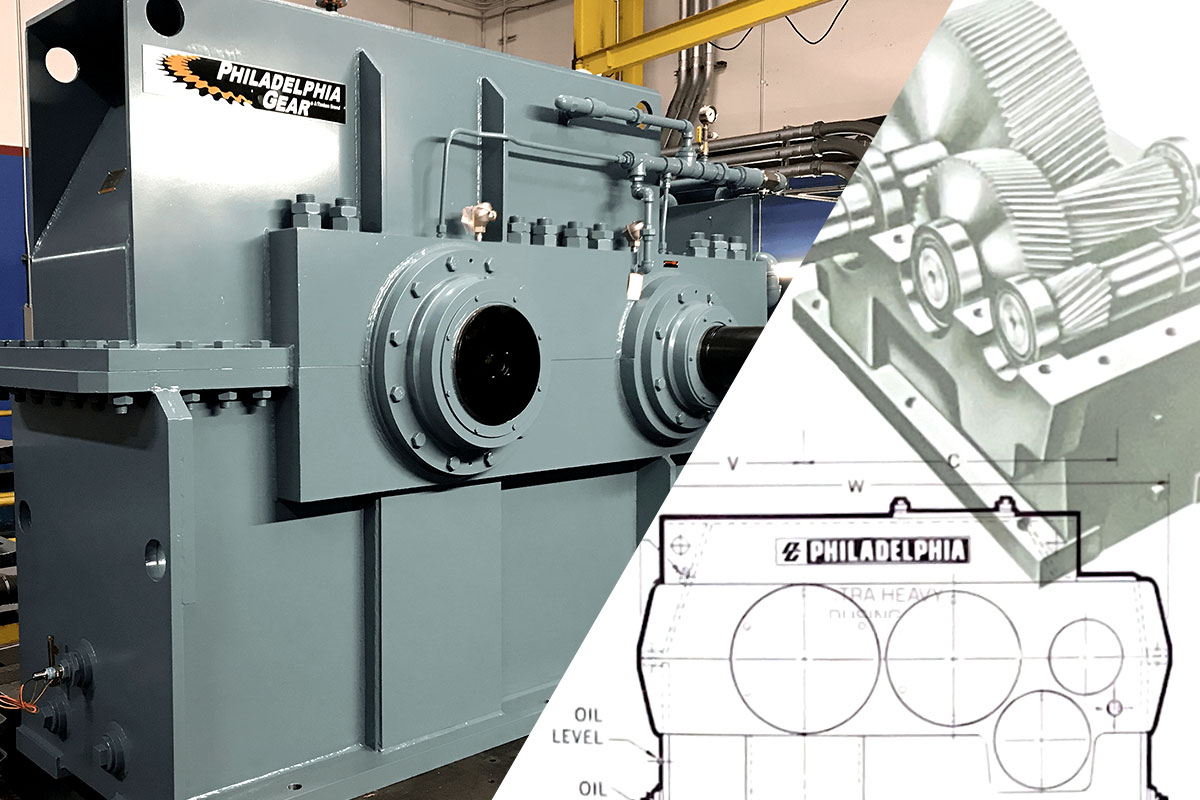
Parallel shaft gearboxes are one of the most common gear configurations for speed reduction and torque conversion, with multiple parallel industrial gears delivering sequential reductions. Parallel shaft gearbox configurations (and therefore output ratios) are theoretically unlimited, but in typical single/double/triple/quadruple configurations, they are capable of ratio ranges from 1:1 to 985:1.
For these reasons, parallel shaft gearboxes (also called parallel shaft speed reducers) are workhorse industrial gearboxes for torque-extreme applications, while also achieving high speed capacities up to 5,000 RPM. Parallel shaft gearbox housing must generally be spacious and durable to contain the large gear systems within, making them less space-efficient than epicyclic gearbox systems.
Due to the high loads associated with parallel shaft gearbox configurations, it is critical that all components — including the gears and pinions themselves, drive shafts, bearings, and lubricants — be of the highest industrial quality, with regular maintenance, inspection, and testing.
- Dry dock cranes: Hoists and rotation drives
- Lumber electric motors: spindle feeds, hoists, chain drives, carriage drives, log hauls, planer feeds, transfer mechanisms, and tray drives
- Water and liquid agitator gearboxes
- Heavy duty industrial conveyor drives
- Food industry equipment including meat grinders, dough mixers, and slicing mechanisms
- Machine tool gearboxes: Bending rolls, punch-presses, plate planers, auxiliary drives
- Metal mill conveyors, drawing drives, pinch/dryer/scrubber rolls, and wire machine gearboxes
- Paper mills: agitators, conveyors, chippers, extruders, kiln drives, and pumps
- Centrifugal, proportioning, reciprocating, and rotary pumps
- Rubber and plastics industrial gearboxes
- Textile batchers, dryers, dyeing machinery, looms, and washers
Spiral bevel and spiral helical gearboxes
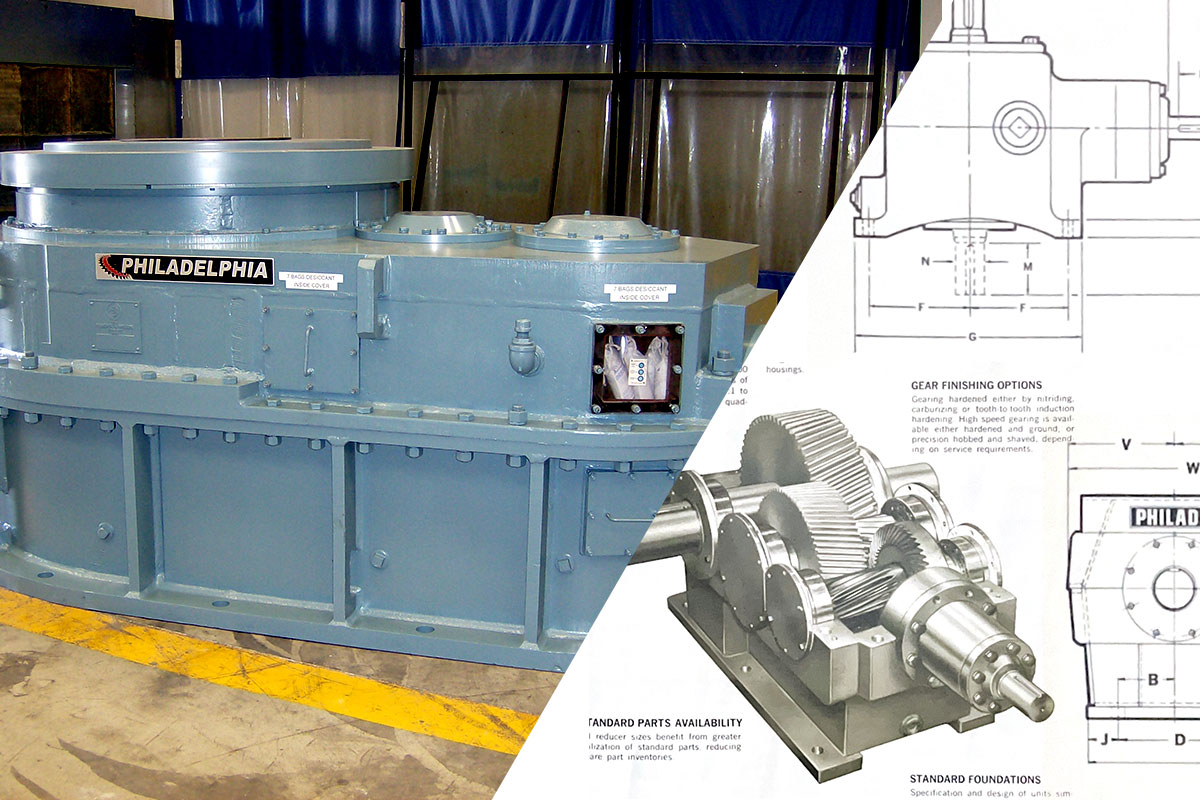
Spiral bevel gearboxes and spiral helical gearboxes carry most of the same benefits and use cases of parallel shaft gearboxes, but use curved, angled gear teeth to transmit power between intersecting shafts at 90 degrees. For this reason, spiral bevel gearboxes share almost all applications with parallel shaft designs.
It should be noted, however, that the longer gradual tooth profile coneys several advantages over parallel shaft systems:
- Higher speed capability, thanks to reduced impact load
- Up to 9,000,000 lb.in. of output torque
- Quieter and smoother operation with reduced vibration
- More compact than applying a coupling arrangement to a parallel shaft speed reducer
These advantages are of course offset by several considerations, as spiral bevel gearboxes are more complex to manufacture and service. Also, since these gearbox configurations generate axial thrust in two separate directions, bearings, mounts, and drive shafts must be designed to accommodate these stresses.
- Dry dock cranes: Hoists and rotation drives
- Lumber electric motors: spindle feeds, hoists, chain drives, carriage drives, log hauls, planer feeds, transfer mechanisms, and tray drives
- Water and liquid agitator gearboxes
- Heavy duty industrial conveyor drives
- Food industry equipment including meat grinders, dough mixers, and slicing mechanisms
- Machine tool gearboxes: Bending rolls, punch-presses, plate planers, auxiliary drives
- Metal mill conveyors, drawing drives, pinch/dryer/scrubber rolls, and wire machine gearboxes
- Paper mills: agitators, conveyors, chippers, extruders, kiln drives, and pumps
- Centrifugal, proportioning, reciprocating, and rotary pumps
- Rubber and plastics industrial gearboxes
- Textile batchers, dryers, dyeing machinery, looms, and washers
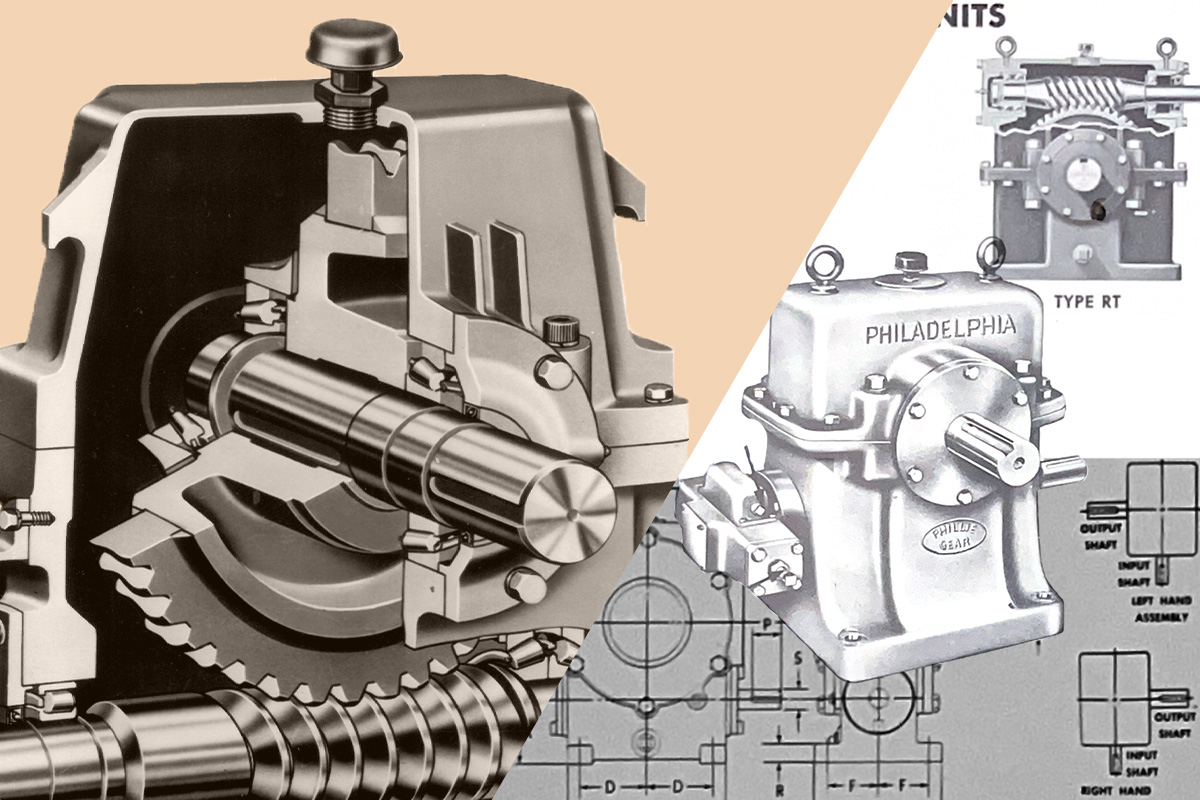
Worm gear speed reducers
Industrial worm gear speed reducers utilize a unique helical worm driving screw (a worm wheel) to deliver extremely high drive ratios, up to 100:1 in a single stage, allowing for compact efficiency in 90 degree offset gearbox configurations.
Worm gear drives cannot achieve the torque efficiency of parallel shaft or spiral bevel gearboxes, but are ideal for compact, medium-duty applications where cost, space, and sound are primary considerations. Worm wheels also provide self-locking capability, to a degree, allowing for light load holding and a degree of inherent safety.
- Wind turbine pitch control systems
- Manufacturing drive conveyor systems and material handling equipment
- Agricultural irrigation systems and harvesting machinery
- Mining hoists and crushers
- Inclined conveyors across multiple industries
- Lifting and hoist equipment, thanks to self-locking load holding
High-speed gearbox units
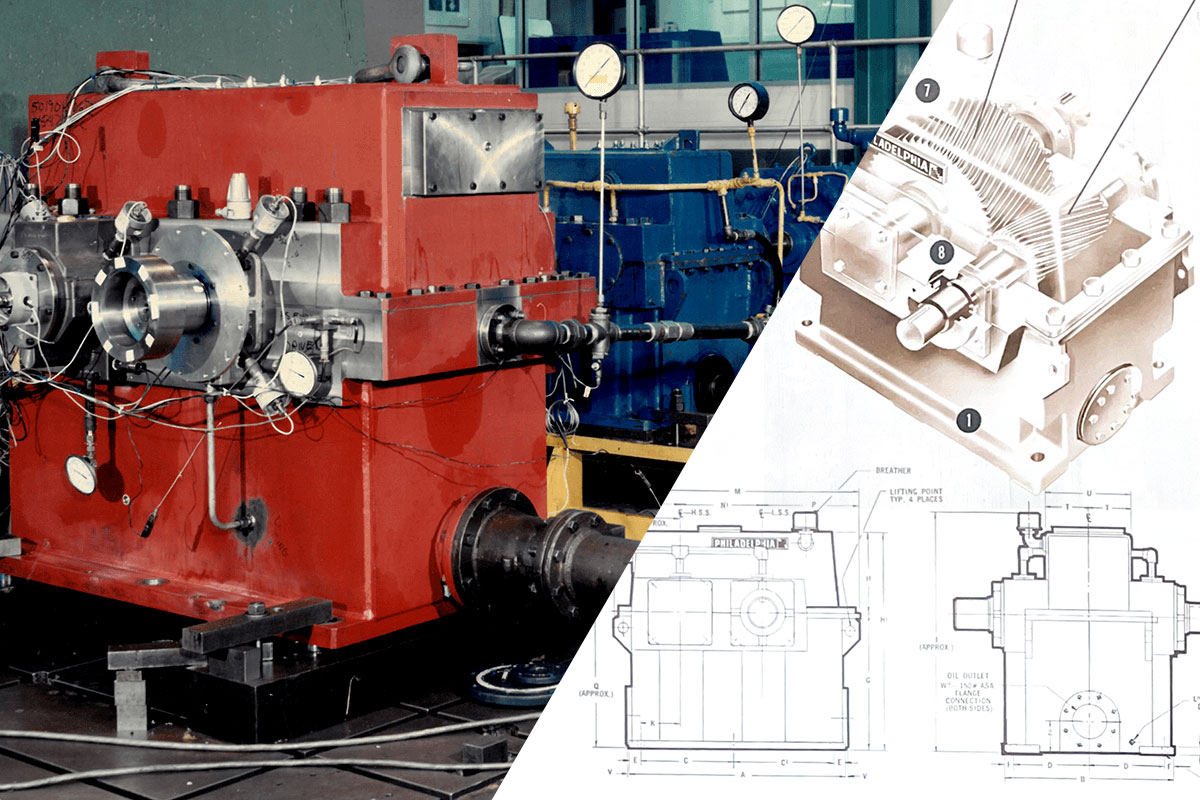
High-speed industrial gear drives apply single or double helical gear geometries and integrated pinions to achieve significantly greater speed and horsepower output than gearbox configurations optimized for torque load or speed reduction. High speed gearbox units output power parallel to the drive input axis, allowing for extreme mechanical efficiency.
High-speed gearboxes can handle anywhere from 350 horsepower to 80,000+ horsepower, with a wide range of flexibility in design specification and configuration.
- High-megawatt transmission in gas turbine power plants
- Centrifugal blower application in oil refineries
- High-horsepower transmission of steam turbine generators
Pump gearboxes
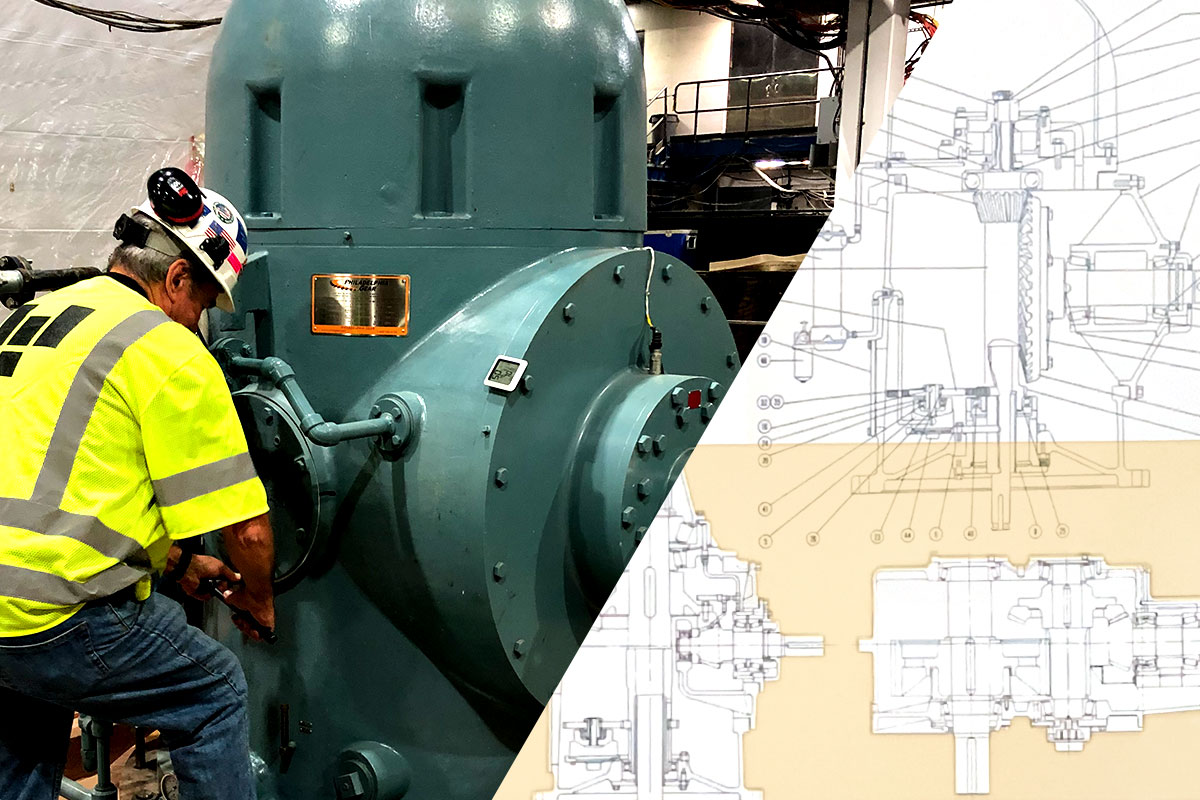
Vertical pump gearboxes house spiral bevel gears at a 90 degree angle to convert horizontal rotation into vertical pump force, via either speed increase or reduction as necessary for the application. The precision-cut steel bevel gears allow for extremely efficient, low-vibration operation, minimizing noise while maximizing lifespan of the pump gearbox mechanism.
Pump gearboxes are typically mated to electric motors, steam turbine drives, or multi-cylinder internal combustion engines, the specifications of which significantly determine all manufacturing and customization factors of the vertical pump drive to be used.
Thanks to ramp-shaped pin backstops, pump gearboxes can inherently prevent unwanted reverse rotation.
- Municipal water and irrigation turbine pumps
- Floodwater and stormwater control pumps
- Heavy industrial sump and pit pumps
- Deep shaft mine dewatering pumps
Cooling tower gearboxes
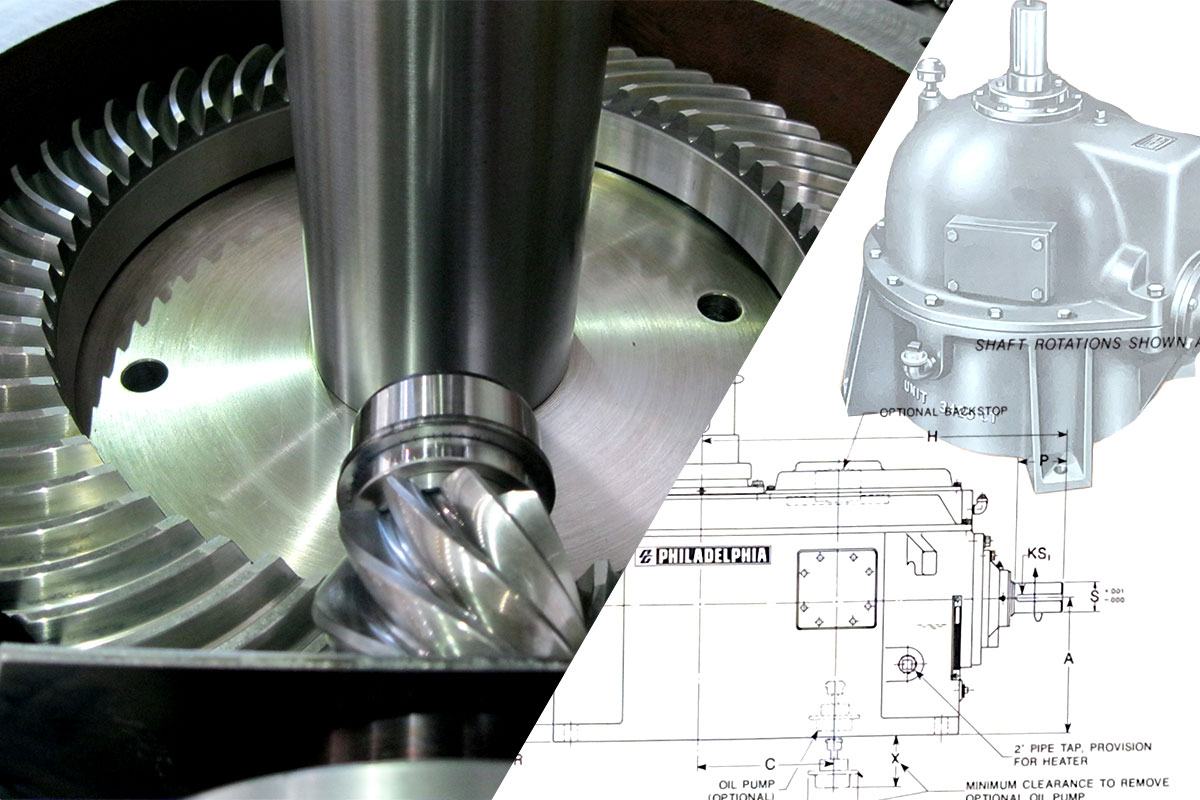
Industrial cooling tower gearboxes, air-cooled heat exchanger drives, and cooling tower speed reducers are specialized gearboxes designed and manufactured to output maximum, reliable thrust for refinery heat exchanger fans, power plants, and other critical cooling tower infrastructure.
Cooling tower gearboxes come in a variety of sizes and configurations, including both vertical and horizontal output orientations, employing right-angle drives and housing where necessary. Cooling tower gearboxes employ spiral bevel gears in single- or double-reduction configuration, depending on the necessary output thrust capacity.
- Gas refinery heat exchangers
- Power plant cooling tower turbines
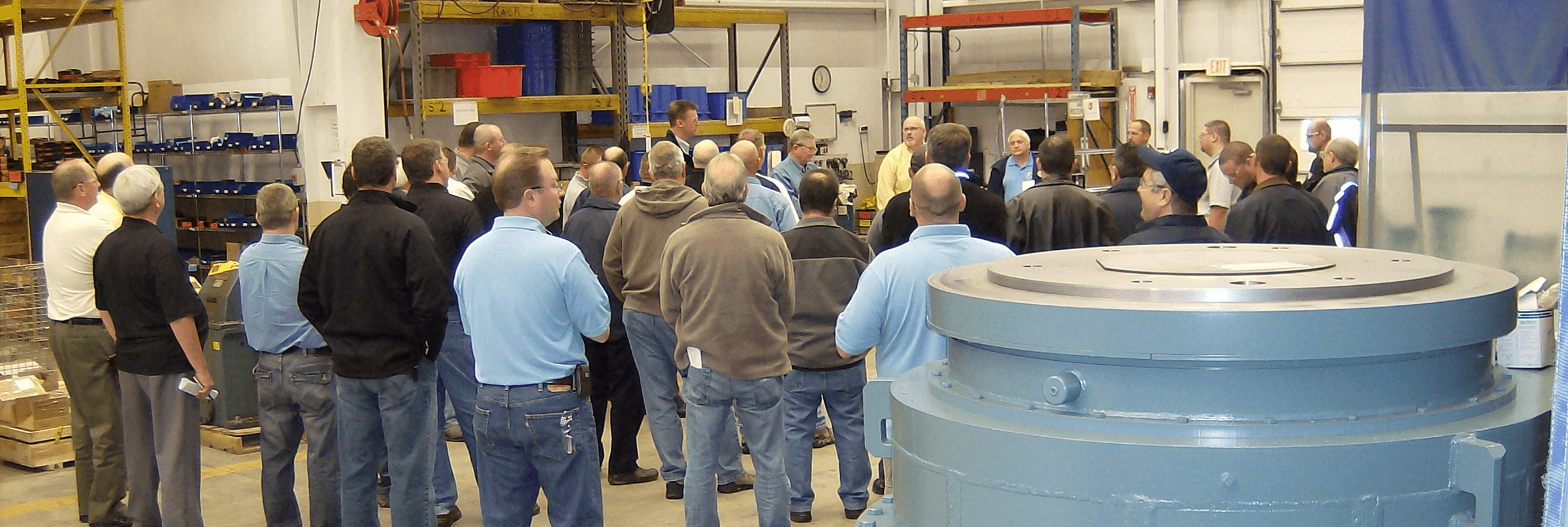
Learn gearbox fundamentals in four hours
Get your maintenance and operations teams trained with Gear 101: An Introduction to Gearing Concepts and Elemental Gearbox Operation.
Philadelphia Gear’s four-hour program provides a concise yet comprehensive overview of complex rotating equipment — and their foundational operating principles — that keep plants running smoothly.
Go to Gear 101Choosing an industrial gearbox
Even within one category of industrial gearbox, the exact usage, throughput, orientation, and performance goals of your application will determine the type, size, and specification of almost every component of your ideal gearbox.
It’s important to always speak to a local or regional industrial gearbox manufacturer or distributor about your exact use case and specifications to find the gearbox that will best suit your needs.
Also available:
Types of industrial gears
Learn about the most common heavy machinery gears and their applications
Get the gearbox you need. Contact Philadelphia Gear today.Philadelphia Gear has been one of nation’s leading partners in gearbox manufacturing, repair, and refurbishment for more than a century. Talk to our team for a customized solution today.
Contact us
Philadelphia Gear has been one of nation’s leading partners in gearbox manufacturing, repair, and refurbishment for more than a century. Talk to our team for a customized solution today.